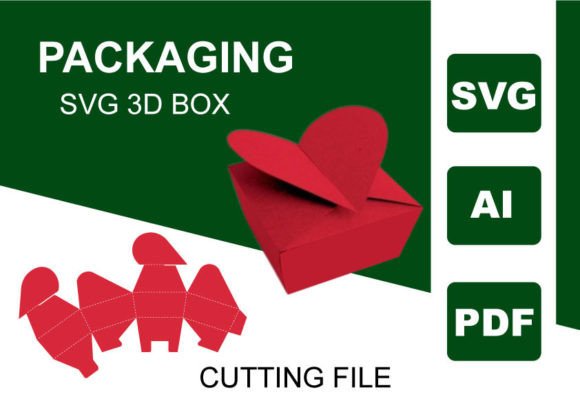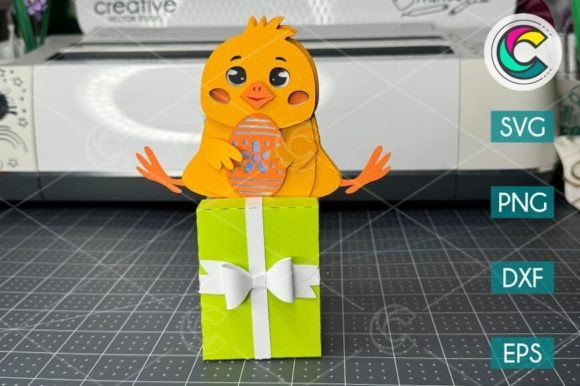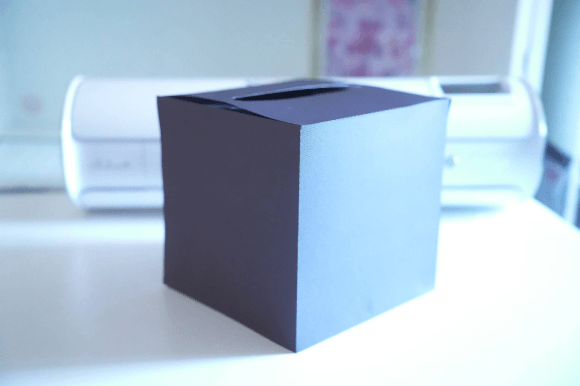
Envelope Box SVG: 3D SVG for Shapes-Based Design
As a digital product creator who’s launched over 200 listings across Etsy, Creative Market, and Shopify—mostly SVG bundles, Canva templates, and print-on-demand collections—I opened Envelope Box SVG expecting a functional but generic shape. Instead, I got something with quiet intention: two clean, layered SVG files in one ZIP, each built with subtle dimension, balanced negative space, and consistent stroke weight. It doesn’t scream “trendy”—it whispers “thoughtful.” That matters when you’re building a cohesive seasonal collection or scaling a handmade business where visual trust is earned through consistency.
The mood leans toward elegant practicality—not overly ornate, not starkly minimal. Think wedding stationery, boutique baby shower kits, or small-batch gift packaging design. It reads as feminine without being cutesy, structured without feeling corporate. That versatility is rare in Shapes-category assets. Most envelope-style SVGs either collapse into flat 2D silhouettes or overcomplicate with unrealistic folds. This one lands in the sweet spot: clearly recognizable as an envelope box, with gentle 3D cues that hold up at multiple sizes and translate well to both digital and physical outputs.
I tested Envelope Box SVG across six real product scenarios before finalizing my next Etsy launch:
- Printable invitation suites — Used one SVG as a layered base for editable text boxes in Canva; paired it with a serif font for elegance and a script font for names. The fold lines stayed crisp even when scaled down to 4×6”.
- Cricut-ready packaging inserts — Imported into Design Space and ran a test cut on 110-lb cardstock. Clean edges, no stray nodes. The second SVG file (slightly simplified) worked better for intricate scoring lines.
- Sublimation mug wraps — Exported as high-res PNG with transparent background. Centered it on a 15-oz ceramic mockup—no distortion, no pixelation. The 3D SVG depth translated surprisingly well to curved surfaces.
- Digital paper pack add-on — Placed it over textured kraft paper PNGs, adjusted opacity to 70%, and created three coordinated patterns. Customers love these for planner stickers or scrapbooking kits.
- Social media promo graphics — Used the SVG as a framing device in Instagram carousels announcing new printable collections. Its shape naturally draws the eye to centered copy—strong visual hierarchy without extra design work.
- Product mockup anchor — Dropped it into a flat-lay mockup of a gift box bundle. Instantly elevated perceived value—customers associate clean, dimensional shapes with premium handmade businesses.
Where Envelope Box SVG shines most is in presentation. On Etsy, thumbnails decide whether a shopper clicks. This asset holds contrast well—even at 200px wide, the fold lines read clearly against white or soft neutral backgrounds. That means stronger click-through potential than flatter alternatives. When bundled with coordinating elements (like ribbon vectors or wax seal clipart), it becomes a visual anchor for themed listings—think “Spring Wedding Bundle” or “New Baby Keepsake Kit.” It supports brand identity without demanding attention away from your core message.
It works best in contexts where dimension adds meaning: packaging design, gift-related printables, invitation templates, nursery prints, and social media templates built around gifting or celebration. As a graphic design asset, it bridges digital and physical use cases—equally effective as a Canva template background, a Cricut project cut file, or a sublimation design base layer.
Use it carefully in these situations:
- Sticker sheets where tiny details vanish—avoid using the full folded version for 0.75” die-cut stickers; simplify first.
- Dark-background layouts without testing contrast—some fold shadows fade on charcoal or navy. Always preview on your intended background.
- Text-heavy templates—its shape competes with dense copy. Reserve it for headers, dividers, or section frames instead of full-page backgrounds.
- Low-resolution print products like basic greeting cards—if outputting under 150 DPI, verify PNG transparency and edge sharpness before bulk printing.
My seller checklist before publishing anything using Envelope Box SVG:
- Test both SVG files in Cricut Design Space and Silhouette Studio—check for hidden layers or offset paths that could disrupt cutting.
- Preview the ZIP contents as a marketplace thumbnail: does the main file stand out at 280×280px?
- Drop the PNG version onto white and dark mockups—does it retain legibility and balance?
- Print a sample on matte cardstock and glossy photo paper—confirm color fidelity and fold-line clarity.
- Verify commercial license terms—this is a commercial design, but always re-check usage rights before bundling into a design bundle or selling finished merchandise.
- Organize customer files clearly: label SVGs as “Envelope_Box_Folded” and “Envelope_Box_Simplified,” include a README with recommended fonts (I pair it with Playfair Display, Montserrat, and Pacifico).
This isn’t a flashy, viral-ready asset—it’s a quietly reliable one. For sellers building long-term catalogs rather than chasing trends, Envelope Box SVG delivers what many overlook: consistency across formats, scalability without compromise, and a professional tone that aligns with buyers seeking quality digital product foundations. Whether you’re creating printable design packs for Etsy, launching a print-on-demand line on Redbubble, or designing social media graphics for clients, it’s the kind of 3D SVG that earns repeat use—not because it shouts, but because it works.